Share article
Print article
The International Court of Justice's landmark advisory opinion on climate change has come in handy for South African communities that are trying to stop global oil company Shell from drilling for oil and gas off the coast.
The opinion, handed down by the world's highest court in July 2025, sets out what all governments are legally required to do to tackle climate change. It confirmed that:
All states have a duty to prevent activities within their jurisdiction from causing significant climate harm.
States must phase out fossil fuels to keep global temperatures below 1.5C above pre-industrial times. This includes regulating private companies, such as fossil fuel corporations, to drive their pollution levels down.
Read more:
Historic climate change ruling from the International Court of Justice: what it means for Africa
Human rights to life, health, food, water and a healthy environment are directly affected by climate change. Therefore, states must protect these rights.
Cumulative effects matter. One mining or drilling project may seem small but governments must consider its contribution to global emissions and climate harm.
Governments are also legally obliged to adapt towns, cities and rural areas so that they can withstand climate disasters, especially for those most at risk.
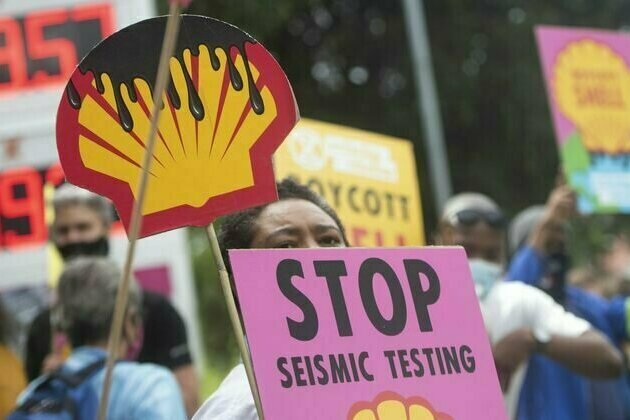
The advisory opinion is already being used in South Africa by a community and environmental law organisation, Natural Justice, and a sustainable development advocacy group, The Green Connection, in their appeal against a government decision to allow Shell to drill up to five exploration and appraisal wells off the coast of the Northern Cape province.
Their appeal says the South African government has not considered how Shell's oil exploration will contribute to climate change.
Read more:
Climate justice for Africa: 3 legal routes for countries that suffer the most harm
I am an environmental law specialist who researches how international and domestic law can be used to advance climate justice in South Africa and across Africa. In my view, the advisory opinion could shift the balance in courtrooms across Africa in favour of environmental justice and human rights groups. It confirms that governments must align fossil fuel decisions with their duty to prevent harm. This gives communities a stronger legal basis to argue that fossil fuel expansion undermines both their rights and their country's climate obligations.
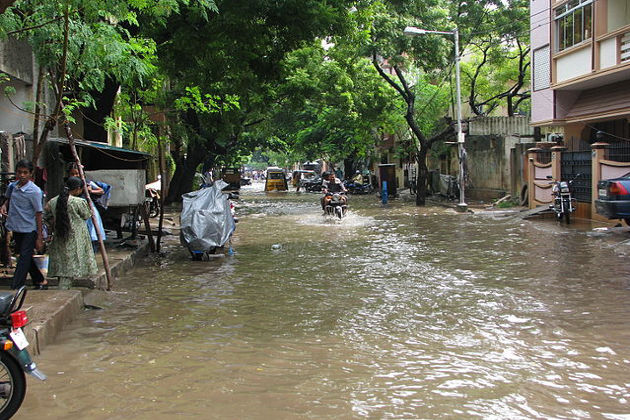
South Africa is already experiencing worsening floods, droughts and storms. Every bit of warming increases these risks.
The country's 2024 Climate Change Act sets out a pathway to cut emissions and build resilience. Yet fossil fuel projects are still being approved by the government.
In June 2025, South Africa's Department of Mineral Resources granted Shell an environmental authorisation to drill for oil and gas in the ocean on the country's west coast. This area is ecologically sensitive, supporting whales, fish stocks and small-scale fishing communities.
Natural Justice and The Green Connection argue in their appeal that the authorisation is unlawful and defective. They give the following reasons.
The environmental impact assessment assumed an oil spill could be stopped far more quickly than is realistic, and downplayed the risks of ultra-deepwater drilling, where equipment faiure or a blowout on the scale of the 2010 Deepwater Horizon disaster is possible. These risks threaten marine ecosystems and small-scale fishers' livelihoods.
Read more:
Shell didn't consult communities properly about mining the Wild Coast - but how much legal protection do South Africans have?
Some of Shell's safety and emergency response plans were not included in the assessment. This meant the public and decision-makers could not evaluate whether Shell is able to manage a major disaster. Their absence doesn't mean Shell has no plans at all, but it does mean the decision was taken without a transparent review of those plans.
No baseline studies (basic surveys of the marine life and ecosystems in the exact area) were done before approval. Without this information, the risks from spills, and pollution to whales, fish and corals, were likely underestimated.
Read more:
South African communities vs Shell: high court victories show that cultural beliefs and practices count in climate cases
The appeal also says that there was no consideration about how future production might affect South Africa's ability to meet its Paris Agreement commitments, and that drilling for oil and gas is outdated as these are not renewable energies.
Any oil spills could pollute beyond South African borders, potentially reaching neighbouring Namibian waters. However, the environmental impact assessment ignored effects on Namibian fisheries, tourism and coastal communities.
Finally, the approval failed to comply with the Integrated Coastal Management Act, which says the South African government must protect sensitive ecosystems for the long-term benefit of communities and future generations.
The advisory opinion is not legally binding. However, the obligations it has confirmed, in international climate and customary law, are. It is the most authoritative interpretation yet of what governments must do to prevent further climate change.
Under South Africa's constitution, courts must take international law into account when interpreting rights.
Read more:
African debt and climate change: how the ICJ's Vanuatu ruling could be used for broader justice
This gives organisations like Natural Justice and The Green Connection (and others across Africa) a powerful new tool. They can:
challenge new fossil fuel projects in court by arguing they breach international obligations to prevent climate harm
hold governments accountable for weak climate policies or failure to meet Paris targets
strengthen community voices, showing that demands for clean energy and protection of livelihoods are backed by international law.
build regional solidarity, with African groups drawing on the same opinion to resist fossil fuel expansion and demand climate justice.
Across Africa, where 45 countries are exploring for oil, gas or coal, the court's opinion raises the stakes by suggesting that continued fossil fuel expansion could breach international obligations.
The Shell appeal is a test for whether South African courts will accept that fossil fuel expansion in the era of the climate crisis is inconsistent with the constitution and international law.
Read more:
Women battle when trying to take climate change cases to court - South Africa and Nigeria study shows why
Win or lose, the case marks a shift. For the first time, African activists are wielding the United Nations' highest court as part of their legal strategy. As climate impacts intensify, that strategy may prove decisive in shaping Africa's energy future.



 Share
Share
 Tweet
Tweet
 Share
Share
 Flip
Flip
 Email
Email